5 Signs Your UPF Shirt Still Actually Works (And 2 Signs It Doesn't)
Quick Answer: UPF protection degrades from repeated washing, chlorine exposure, and UV breakdown of the fabric’s protective treatment or weave — since it’s invisible to the eye, the most reliable signs are tracking wear history (age, wash count, chlorine exposure) rather than how the shirt looks, since faded-looking fabric isn’t always a give-away and normal-looking fabric isn’t always still protective.

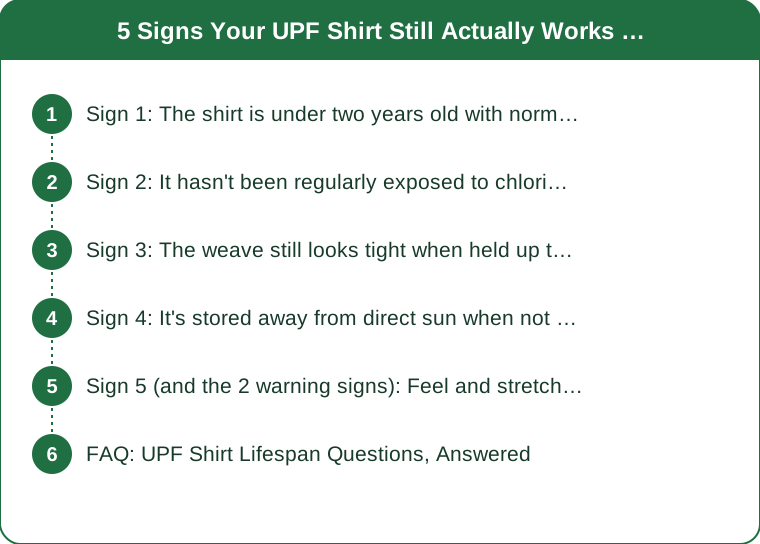
Sign 1: The shirt is under two years old with normal home-laundry use
Most UPF garments are rated to maintain their protection level for a specific number of wash cycles (often 40-plus, listed on the tag or brand’s product page) under normal home laundering — if your shirt is relatively new and hasn’t seen heavy chlorine or extreme sun-and-wash cycling, it’s very likely still performing at close to its rated protection.
Sign 2: It hasn’t been regularly exposed to chlorinated pool water
Chlorine breaks down the elastic fibers and protective treatments in fabric faster than fresh water does, so a UPF shirt used mainly for hiking, running, or beach days (rinsed in fresh or salt water) holds its rating longer than one worn regularly for pool swimming, where chlorine exposure accelerates degradation significantly.
Sign 3: The weave still looks tight when held up to light
This one’s actually visible — hold the fabric up to a bright light source; if you can see a lot of light passing through evenly, the weave has likely loosened with wear, which reduces the physical UV-blocking function of a tightly-woven UPF fabric. A tight weave that blocks most light is a reasonably good visual proxy for intact protection, even though it’s not a lab-precise test.

Sign 4: It’s stored away from direct sun when not worn
Fabric left balled up in direct sunlight (like on a car dash or windowsill) between wears degrades faster from constant UV exposure than fabric stored in a drawer or closet — storage habits genuinely affect how long UPF treatment-based fabrics hold their rating, since UV breakdown doesn’t require the garment to be worn to happen.
Sign 5 (and the 2 warning signs): Feel and stretch changes signal it’s time to replace
If the fabric has gone from crisp to noticeably soft and stretched out, or if a treatment-based UPF garment (versus tightly-woven fabric) has been through 40+ washes, treat those as your two clearest warning signs that protection has likely dropped meaningfully below its original rating, even if the color still looks fine. When in doubt, a fabric’s changed hand-feel is a more reliable signal than its visual appearance.
FAQ: UPF Shirt Lifespan Questions, Answered
Does fading color mean UPF protection is gone?
Not necessarily — some UPF protection comes from the tight weave itself rather than dye, so a faded shirt can still protect well, while a vividly colored one that’s been chlorine-heavy and over-washed may have degraded more than it looks.
Can I test my own UPF shirt somehow?
The hold-up-to-light test is a reasonable home check, though it’s not as precise as lab UPF testing — if you’re unsure and the shirt is old or heavily used, replacing it is the safer call for regular high-sun-exposure activities.
Do all UPF garments degrade at the same rate?
No — weave-based protection (inherent to the fabric structure) tends to hold up longer than chemical-treatment-based protection, which can wash out faster, so it’s worth knowing which type your garment relies on.
TL;DR:
- UPF protection degrades invisibly from washing, chlorine, and UV exposure over time
- Chlorine exposure accelerates degradation faster than fresh water use
- The light-test (holding fabric up to a bright source) is a reasonable home check for weave tightness
- Changed fabric feel after 40+ washes is a clearer warning sign than color fading alone UPF clothing doesn’t announce when it stops working — treating wash count and chlorine exposure as your actual replacement timeline keeps your sun protection real, not just visual.
Keep Reading
This article is for general informational and styling purposes only. Fit, sizing, and product availability may vary.