5 UPF Checks for Standing on a Sideline All Autumn
Quick Answer: Autumn sideline spectating produces more UV exposure than most people expect: sessions are long, you stand in one orientation so the same side of your body is exposed for hours, cool air removes the discomfort that normally prompts you to move into shade, and UV remains meaningful on clear autumn days even when it feels mild. Five checks — the neck and ears, the sun-facing side, the hands, the layer over the shoulders, and the hat brim — cover almost all of it.
The temperature tells you nothing about the UV.
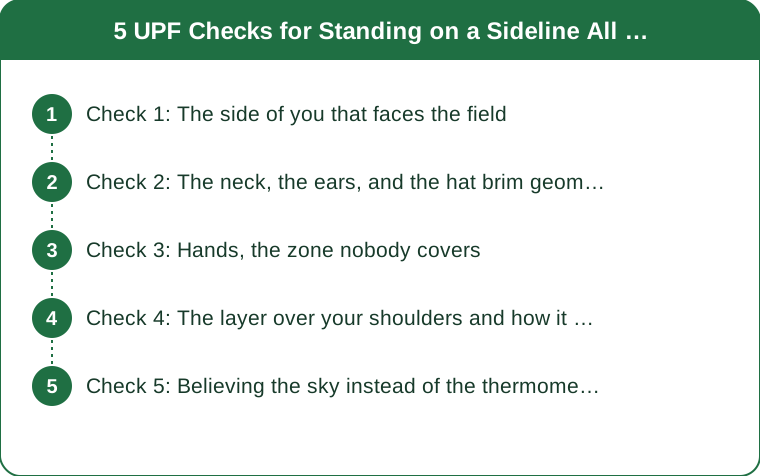
Check 1: The side of you that faces the field
Sideline exposure is asymmetric in a way almost no other activity is.
You stand facing the play, and the sun sits on one side of you for the whole match. Unlike walking or running, where you rotate through every orientation, a sideline session exposes one side of your face, neck, and arm continuously for two or three hours.
This is why long-term sun damage in drivers and spectators shows up asymmetrically — one side of the face weathering faster than the other.
The fix is embarrassingly simple: turn around occasionally, or move to the other side of the field at half time. Changing your orientation once during a session halves the continuous exposure on the worst-affected side.
A UPF long-sleeve layer solves the arm side completely, and it is the item most likely to be in your car already.
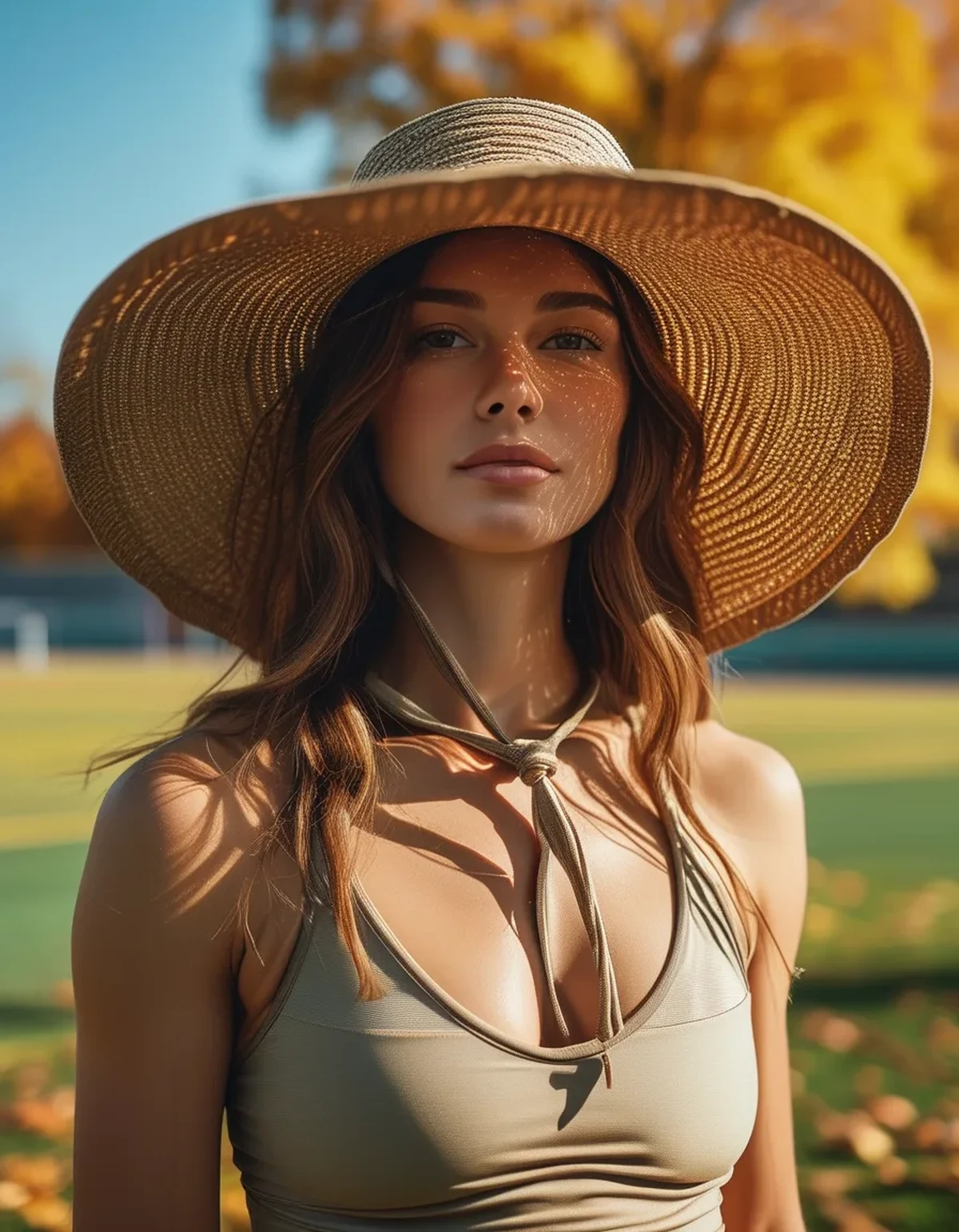
Watch the low autumn sun angle. As the season progresses, the sun sits lower in the sky, which means it comes at you horizontally rather than from overhead — straight at the side of your face and under the brim of a hat that would have shaded you perfectly in July.
Late afternoon fixtures are the worst case. The sun is low, directly in your eyes and on your face, and the session lasts through the hour when most people assume UV has finished for the day.
Check 2: The neck, the ears, and the hat brim geometry
The classic missed zones, made worse by a low sun.
Ears are among the most commonly missed areas and among the more common sites for sun damage to appear over the years. A baseball cap does nothing for them.
The back of the neck goes unprotected whenever hair is up. A ponytail on a cool day exposes an area that has been covered all summer, and the parting line on the scalp is exposed regardless.
A brim only shades what is above it. With a high summer sun, a cap protects the face reasonably well. With a low autumn sun coming in at an angle, the same cap protects almost nothing — the light passes under the brim entirely.
What actually works on a sideline:
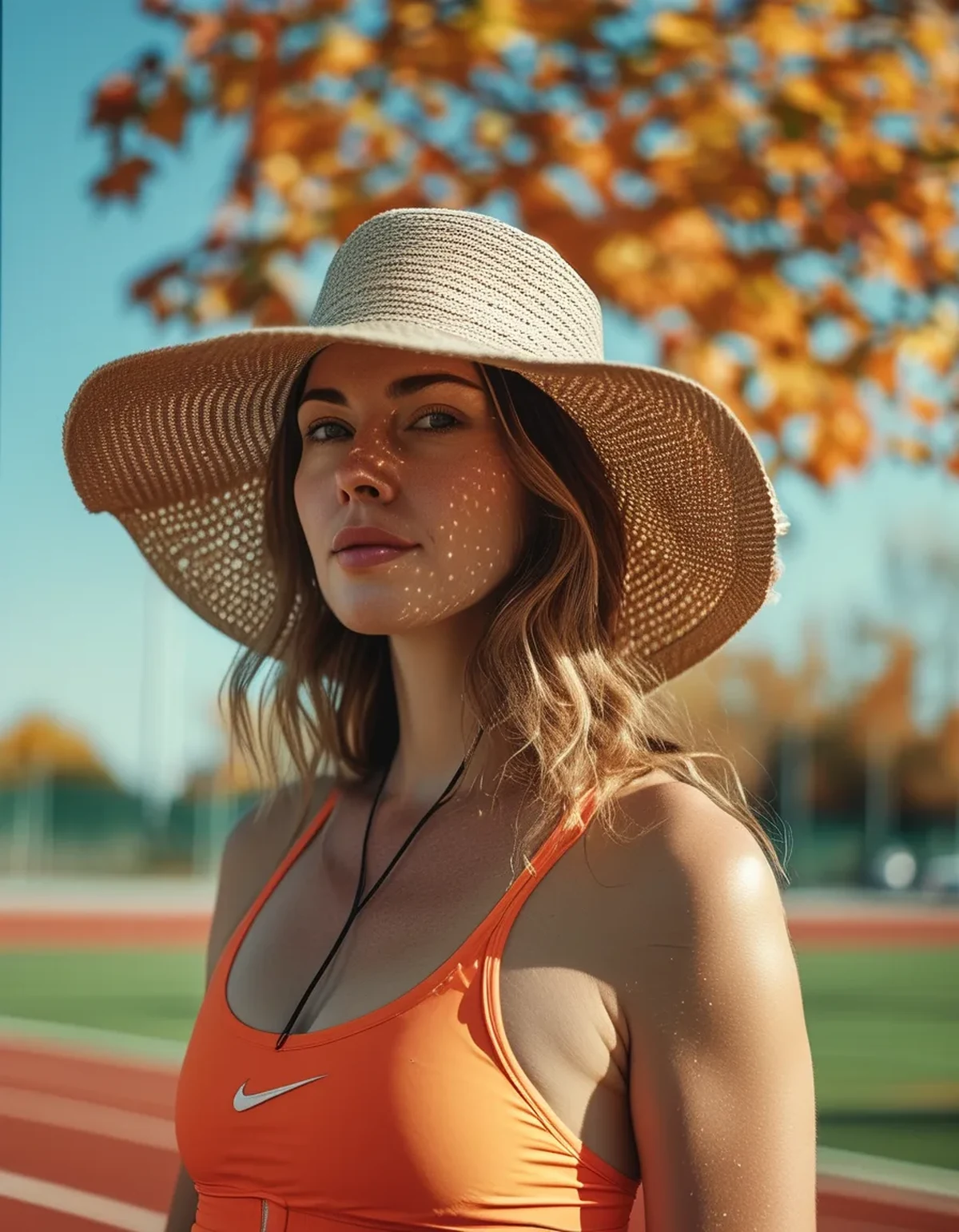
A wide brim all the way round, rather than a peak at the front. It covers ears and neck as well as face, and it works at low sun angles from the side.
Or a cap plus a UPF neck gaiter, which is warmer in autumn air and covers neck and ears together. This combination is often more comfortable than a hat in cool wind.
Or a hood on a UPF layer, up, when the wind justifies it anyway.
Check the hat you keep in the car. Most spectator hats are summer caps chosen for a high sun. The autumn version of the same job needs different geometry, and that is worth one swap in the boot.
Check 3: Hands, the zone nobody covers
Exposed for the entire session, every session, all year.
Hands are among the most sun-exposed sites on the body across a lifetime and among the least protected, because covering them feels excessive and inconvenient.
On a sideline, they are out for hours: holding a coffee, on a rail, in pockets only when cold.
In autumn, cool air actually helps here. Lightweight gloves stop being ridiculous and start being sensible, and a thin pair covers the backs of the hands entirely.
Sunscreen on hands washes off constantly — coffee, water bottles, snacks, wiping the phone screen. It needs reapplying far more often than the face, which almost nobody does.
The single practical move is a pair of thin gloves in the same bag as the hat. They serve double duty in autumn wind, so they get worn.
Watch the wrist gap. Between a sleeve end and a glove, or a sleeve and a watch, there is usually a strip of skin that never gets covered by anything. A slightly longer sleeve or thumbholes closes it.
Check 4: The layer over your shoulders and how it changes when wet
Autumn spectating means damp, and damp changes the fabric.
Wet fabric provides less UV protection than the same fabric dry. Water fills the spaces in the weave and reduces scattering, so a rained-on layer offers less protection than its label suggests until it dries.
This matters on a sideline in an autumn shower, where you get damp and stay damp for the rest of the session.
Stretched fabric also protects less. Pulling a knit tight over your shoulders opens the gaps between yarns and lets more UV through. A layer that fits with a little room protects better than the same garment worn snug.
Dark and mid-tone colours protect better than pale ones at the same construction, because dye absorbs UV. This is one of the few places where the intuitive answer is wrong — a white shirt feels cooler and generally protects less than a navy one of the same fabric.
Dense weaves beat loose ones. The hold-it-to-the-light test still works: if you can see clear points of light through the weave, UV is coming through the same gaps.
Old, thin, well-loved layers protect less. Fabric that has been washed hundreds of times and worn thin has fewer fibres in the way. The favourite hoodie is often the least protective thing in the bag.
A shell over the top solves both wet and wind. Most rain shells are effectively opaque to UV, which makes them a complete solution during the shower rather than just after it.

Check 5: Believing the sky instead of the thermometer
The single biggest error, and it is a seasonal one.
Cool temperature removes the cue that normally drives sun-protective behaviour. In summer, heat and glare push you into shade. In autumn, a clear crisp day feels entirely benign and you stand in full sun for three hours without a thought.
UV falls through autumn but does not vanish, and on clear days at midday it can remain at levels well worth protecting against, particularly at lower latitudes and higher elevations.
Cloud is unreliable as protection. Thin and broken cloud lets a large proportion of UV through, and scattered cloud can occasionally produce brief levels higher than clear sky through edge-scattering effects.
Reflection adds up. Wet grass, standing water on a pitch, and light-coloured surfaces around a field all bounce additional UV upward — under the brim of your hat and onto the underside of your chin, which is the one place sunscreen never goes.
Altitude increases UV substantially. Mountain-town fixtures deliver more UV at the same air temperature, and the cold makes it feel like less.
The practical rule: check the UV index, not the forecast temperature. It takes five seconds on a phone, and it is the only number that tells you whether the next three hours need protecting against.
Build a sideline bag once and forget it: wide-brim hat, UPF long-sleeve layer, thin gloves, shell, sunscreen for face and hands. The whole point is that it lives in the car so the decision is never made in a rush on a cold morning.
TL;DR:
- Standing in one orientation for hours creates asymmetric exposure; turn around or switch sides at half time.
- A low autumn sun passes straight under a cap brim, so wide brims, gaiters, and hoods do what caps no longer can.
- Hands are chronically exposed and easiest solved with thin gloves that autumn justifies anyway.
- Wet and stretched fabric protects less, dark colours protect more, and the UV index — not the temperature — is the number to check.
Build the sideline bag once this week. Everything else on this list happens automatically after that.
Keep Reading
This article is for general informational and styling purposes only. Fit, sizing, and product availability may vary.