5 UPF Clothing Myths That Are Quietly Leaving Your Skin Unprotected
Quick Answer: UPF clothing is genuinely effective, but common myths — that any dark or thick fabric is automatically protective, that UPF ratings never change, and that wet fabric protects the same as dry — can leave real gaps in your sun protection. Knowing the actual mechanics matters more than trusting the label alone.
UPF clothing sounds like a simple solved problem: put it on, you’re protected. The reality has more nuance than the marketing suggests, and a few common myths are worth clearing up.

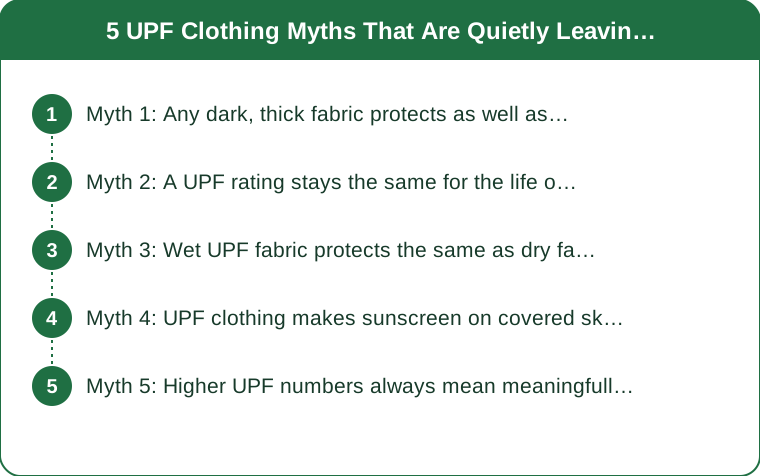
Myth 1: Any dark, thick fabric protects as well as labeled UPF clothing
Color and thickness correlate with sun protection but don’t guarantee a specific UPF rating — an untested dark cotton shirt might offer UPF 10 or UPF 30 depending on weave tightness and fiber type, with no way to know without lab testing. Labeled UPF garments are actually tested and rated, which untested ‘looks protective’ clothing simply isn’t.
Myth 2: A UPF rating stays the same for the life of the garment
UPF ratings can degrade with wear, washing, and stretching over time, particularly in fabrics that rely on tight weave rather than chemical treatment for their rating. A UPF 50 shirt worn and washed heavily for a season isn’t guaranteed to still perform at UPF 50 — replacing well-worn sun shirts periodically matters more than people assume.

Myth 3: Wet UPF fabric protects the same as dry fabric
Getting UPF fabric wet can lower its effective protection, sometimes significantly, because water changes how fibers scatter and absorb UV light — this is a well-documented effect, not a minor technicality. If you’re wearing UPF clothing for a day at the beach or pool, understand that its rating printed on the tag assumes dry conditions.
Myth 4: UPF clothing makes sunscreen on covered skin unnecessary
UPF clothing and sunscreen aren’t interchangeable for the same areas — they’re complementary for different ones. Clothing protects what it covers; anything exposed (hands, neck gaps, face) still needs sunscreen regardless of how good your shirt’s rating is. Treating a UPF shirt as a substitute for sunscreen everywhere leaves real exposed gaps unprotected.
Myth 5: Higher UPF numbers always mean meaningfully better protection
The jump from UPF 30 to UPF 50 blocks a smaller additional percentage of UV rays than people assume — UPF 30 blocks about 97% of UV, UPF 50 blocks about 98%. Both are excellent; chasing the highest number isn’t as critical as making sure you’re wearing rated UPF clothing at all instead of untested regular fabric.
TL;DR:
- Untested dark or thick fabric isn’t the same as a lab-rated UPF garment
- UPF ratings can degrade with heavy washing and wear over time
- Wet UPF fabric offers less protection than dry — check garment guidance
- UPF clothing and sunscreen protect different areas and both are usually needed
- UPF 30 and UPF 50 are both excellent; the bigger win is wearing rated fabric at all
This is general information, not medical advice — for extended high-UV exposure, combine rated UPF clothing with sunscreen on any exposed skin.
Keep Reading
This article is for general informational and styling purposes only. Fit, sizing, and product availability may vary.