Does UPF Clothing Lose Sun Protection Over Time?
Quick Answer: Yes, UPF protection can degrade over time from repeated washing, chlorine exposure, and fabric stretching or thinning — most quality UPF garments hold their rating for about 30-40 washes before protection starts to noticeably drop.
You bought that UPF 50+ shirt three summers ago and you’ve worn and washed it dozens of times since. It looks fine. But looking fine and protecting like new aren’t automatically the same thing with sun-protective fabric.
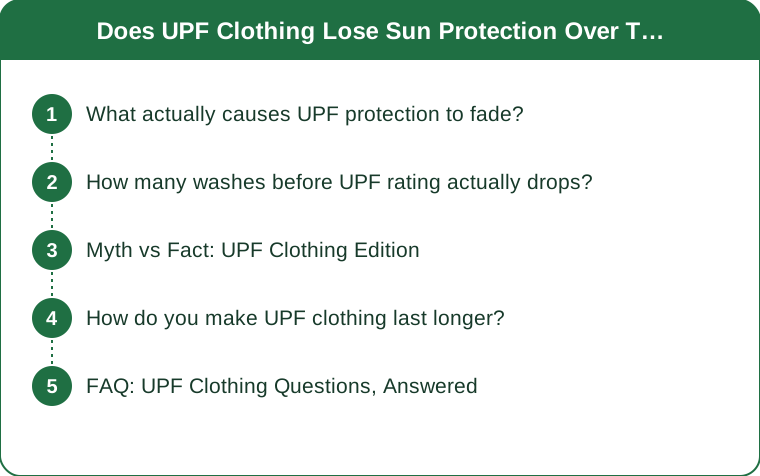
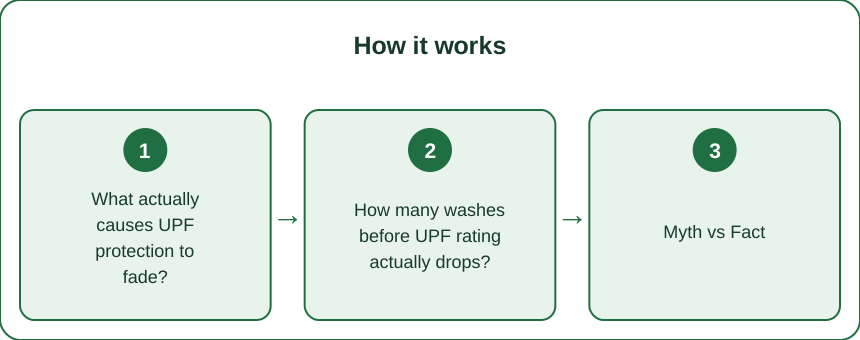
What actually causes UPF protection to fade?
Three main culprits: repeated washing and drying (which gradually breaks down the fabric’s tight weave or chemical treatment), chlorine exposure (which degrades some treated fabrics faster than fresh or salt water), and mechanical stretching from wear, which can open up the weave just enough to let more UV through.
Sun exposure itself, interestingly, degrades UPF fabric far less than washing does — it’s the laundry cycle doing most of the damage, not the sun it’s protecting against.
How many washes before UPF rating actually drops?
Most quality UPF-rated garments are tested to hold their rating for around 30-40 washes, per industry testing standards. Budget or unrated ‘sun protective’ items without a certified UPF number may degrade faster and less predictably.
If you’re wearing and washing a UPF shirt weekly through a summer, that’s roughly 12-16 washes per season — meaning a well-made piece should hold its rating for 2-3 full summers of regular use before real concern sets in.
Myth vs Fact: UPF Clothing Edition
Myth: A dark, tightly-woven cotton shirt gives similar protection to a UPF-rated shirt. Fact: Untreated cotton typically rates only UPF 5-9 — a certified UPF 50 garment blocks roughly 10x more UV, treatment and weave engineering do real work here.
Myth: Once a UPF shirt fades in color, it’s lost its protection. Fact: Color fading and UPF degradation aren’t directly linked — a garment can look sun-bleached while its UV-blocking weave is still largely intact, or vice versa.
Myth: Wet UPF fabric protects the same as dry. Fact: Many fabrics lose some UPF rating when wet, since water can temporarily open the weave — an important gap for swimwear specifically.
How do you make UPF clothing last longer?
Wash less often and skip the dryer’s high heat when possible — air drying reduces the mechanical stress that degrades the weave. Avoid fabric softener, which can coat and reduce the effectiveness of some UPF treatments.
Rinse chlorine-exposed swimwear promptly rather than letting it sit, since chlorine actively breaks down certain synthetic treatments faster the longer it stays in contact with the fabric.
FAQ: UPF Clothing Questions, Answered
How do I know if my UPF shirt still protects well?
There’s no home test for this — track approximate wash count and replace pieces you rely on heavily (like daily hiking or beach shirts) every 2-3 seasons as a reasonable rule of thumb.
Is UPF 50+ meaningfully better than UPF 30?
Yes — UPF 50 blocks about 98% of UV rays versus roughly 96.7% at UPF 30. The gap is small in percentage but matters over cumulative sun exposure.
Does stretching a UPF shirt while wearing it reduce protection in the moment?
Slightly — a tightly stretched area (like across the shoulders during a reach) can transmit marginally more UV than relaxed fabric, though this effect is generally minor for most everyday movement.
TL;DR:
- Washing, not sun exposure, is the main driver of UPF degradation
- Quality UPF garments hold their rating for roughly 30-40 washes (2-3 seasons of regular use)
- Color fading and UPF loss aren’t directly linked — don’t judge by looks alone
- Air dry when possible and rinse chlorine promptly to extend the rating’s life
Treat a heavily-used UPF piece as a 2-3 season investment, not a lifetime one, and replace your daily-wear favorites accordingly.
Keep Reading
This article is for general informational and styling purposes only. Fit, sizing, and product availability may vary.