5 Fabric Checks That Tell You If UPF Clothing Actually Works
Quick Answer: A UPF rating on a tag reflects the fabric as tested — new, dry, and unstretched. Real-world protection depends on weave density, fiber type, color depth, fit, and coverage, and you can assess all five without equipment. Hold it to a light source and look for pinholes, check the fiber content for polyester or nylon over untreated cotton, prefer deeper colors, avoid anything that stretches thin over your body, and verify the coverage where you actually burn. A UPF 50+ label on a shirt that stretches sheer across your shoulders is not delivering 50+.
The tag says UPF 50+. That number came from a lab test on a flat, dry, unstretched sample. Your shoulders are not flat, dry, or unstretched.
Check 1: Hold it up to the light
The simplest and most informative test available, and it takes five seconds.
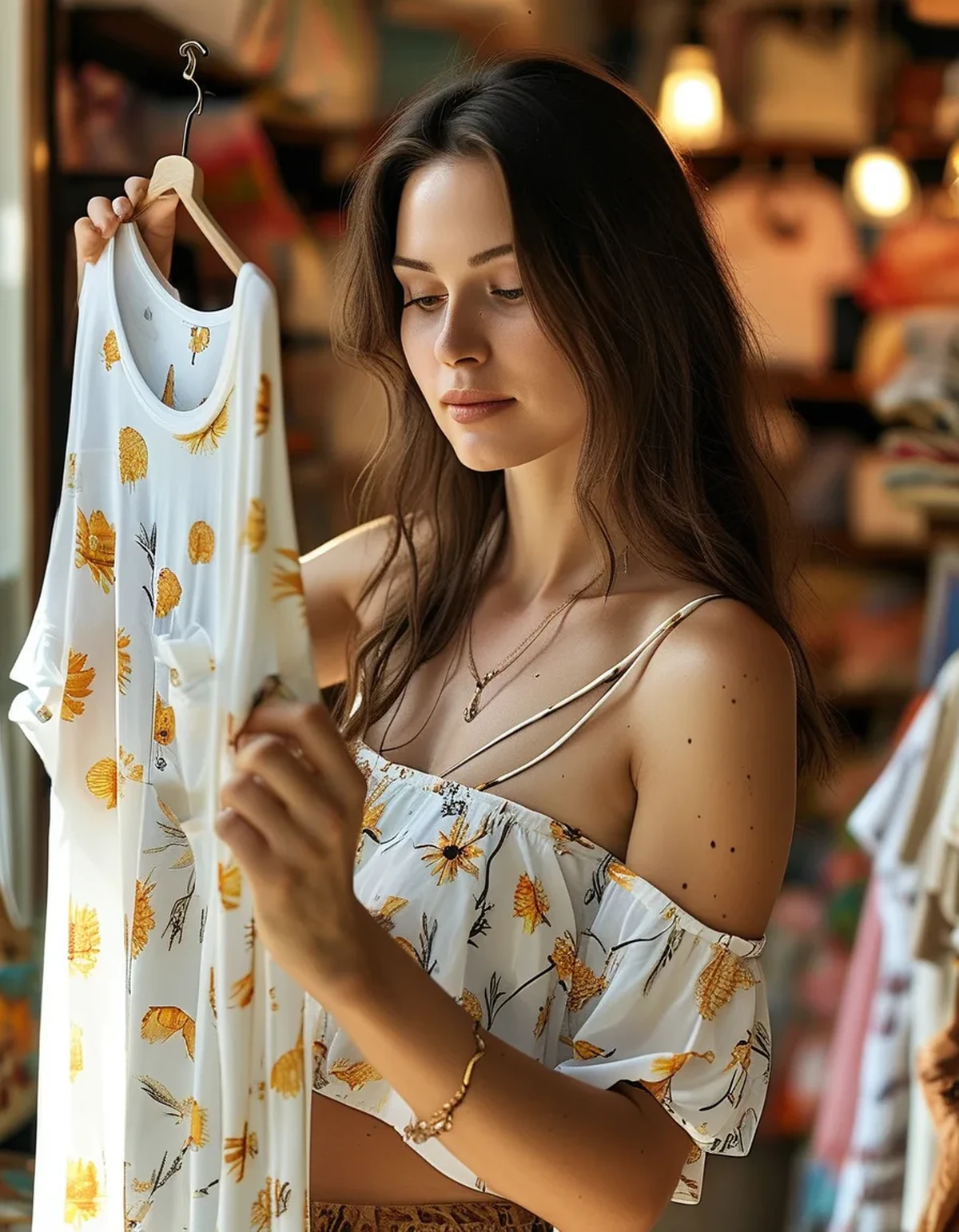
Hold the fabric up toward a bright window or a lamp and look through it. If you can see distinct points of light through the weave, UV is passing through those same gaps. UPF works primarily by physically blocking radiation, so a fabric you can see light through is a fabric that lets UV through.
What you’re looking for: a fabric that appears dense and uniform, with light diffused rather than transmitted in visible pinpoints.
What this catches: loose-weave linens, thin cotton gauze, open-knit jerseys, and lightweight athletic mesh — all of which feel wonderful in heat and provide far less protection than their appearance suggests. A standard white cotton t-shirt is often estimated around UPF 5 to 7, which is a fraction of what most people assume.
Do the test stretched, too. Pull the fabric taut, the way it will be across your shoulders and upper back, and hold it to the light again. Many stretchy fabrics that look dense relaxed become visibly translucent under tension. This is the single most common gap between a tag rating and real-world protection.
Caveat: this test tells you about visible light transmission, which correlates with but doesn’t perfectly predict UV transmission. A dense fabric can still let through more UV than expected, and some treated fabrics block more UV than the light test suggests. It’s an excellent screening test and not a substitute for a rating — use both.
Check 2: Read the fiber content, not just the rating
Fiber type affects UV protection meaningfully, and the differences are consistent.
Polyester performs well. It absorbs UV effectively due to its chemical structure, which is why so much technical sun clothing is polyester-based. It also holds its rating when wet better than most alternatives.
Nylon performs well, particularly in tightly woven forms, and it’s common in swim and water-sport UPF garments.
Untreated cotton performs poorly relative to its weight and opacity. It’s comfortable and breathable, and it isn’t a good sun barrier unless it’s densely woven, dark, or chemically treated.
Bamboo viscose and rayon vary widely and are often weaker than the marketing implies.
Wool performs surprisingly well but is impractical in the heat where you need sun protection.
On chemical UV absorbers: many garments use added UV-absorbing compounds. These work, and they wash out over time — typically the treatment degrades across dozens of wash cycles. A garment whose protection depends on a finish has a shelf life; a garment protected by dense construction and fiber choice largely doesn’t.
Practical guidance: look for high-polyester or nylon content in a tight construction. If the tag credits a chemical treatment for the rating, treat it as a garment with a limited protective lifespan and replace it more often than the fabric’s appearance suggests.
And check for elastane content: a small percentage is fine, but high stretch content means the fabric thins under tension, which reduces protection where it’s stretched most.
Check 3: Look at the color depth
Darker and more saturated colors provide better protection at the same weave density — which runs counter to most people’s instinct in hot weather.
Why: dyes absorb UV radiation. More dye and deeper saturation means more absorption. A navy shirt and a white shirt in identical fabric can differ substantially in UV transmission.
The ranking, roughly, at equal construction: black and navy > deep red and dark green > mid-tones > pastels > white.
The heat objection is real but smaller than assumed. Dark fabrics absorb more visible light and heat up more in direct sun. In practice, a loose dark shirt in a technical fabric with good airflow is often comparable in comfort to a tight light one, because ventilation matters more than color for perceived heat. Several studies of desert clothing traditions have found dark loose robes perform comparably to light ones for this reason.
The compromise that works: dark or saturated color, loose fit, technical fabric with good breathability. You get the dye’s UV absorption plus airflow.
Where white is acceptable: in a very densely woven or specifically treated fabric where the rating comes from construction rather than color. A white UPF 50+ shirt from a reputable technical brand is genuinely rated; a white cotton shirt is not.
A practical note on faded garments: color fades with washing and sun exposure, and faded fabric provides less protection than it did new. A three-season-old sun shirt that’s noticeably lighter than it was has lost some of what you bought.

Check 4: Test how it behaves stretched and wet
These are the two conditions the lab rating doesn’t cover, and they’re the conditions you actually wear it in.
Stretched: fabric under tension has larger gaps between yarns. A UPF 50+ rating measured on a relaxed sample can drop substantially when the same fabric is stretched. This matters most across the shoulders, upper back, and chest — exactly where sun exposure is highest.
The practical implication: buy sun shirts with a relaxed fit rather than a compressive one. A loose UPF 30 shirt frequently outperforms a tight UPF 50+ shirt in real use. This is one of the most useful and least publicized facts in the category.
Wet: water fills the spaces between fibers and reduces scattering, which allows more UV through in many fabrics. Cotton is the worst offender — a wet cotton shirt can lose a large fraction of its already-limited protection. Polyester and nylon hold up considerably better when wet, which is why swim-specific rash guards are made from them.
Test it in the store where possible: stretch the fabric and hold it to the light. You can’t wet it in a shop, but the fiber content tells you most of what you need — high polyester or nylon means better wet performance.
For water use specifically: choose garments designed and rated for it. Rash guards and swim shirts in nylon-elastane or polyester blends are built for the wet condition; a cotton-blend beach cover-up is not, regardless of how it feels.
And chlorine and saltwater degrade fabrics over time, particularly elastane, which reduces both fit and protection. Rinse in fresh water after every use — it genuinely extends the protective life.
Check 5: Verify the coverage where you actually burn
The best-rated fabric in the world protects only what it covers, and coverage is where most sun-protective wardrobes fail.
The commonly missed areas:
- The back of the neck, particularly with hair up. A collar that stands or a hood addresses this; a crew neck does not.
- The ears and the tops of the ears. A cap leaves them fully exposed; a wide brim doesn’t.
- The tops of the hands, which get sustained exposure while driving, paddling, or holding poles. Thumbholes in a sun shirt’s cuffs cover the back of the hand and are genuinely useful.
- The tops of the feet in sandals, which burn readily and are almost never protected.
- The scalp along the part line, which nothing but a hat covers.
- Under the chin, from water and sand reflection.
What to look for in the garment itself:
- Collar height — a stand collar or a hooded design for neck coverage
- Sleeve length — full length for extended exposure, with thumbholes if you’ll be on the water or driving
- Length through the body — enough to stay covered when you reach up, which is when shirts ride up and expose the lower back
- A hood for anything on the water, where reflected UV hits from below and the sides
On hats: a brim of at least 3 inches all the way around protects the face, ears, and neck. A baseball cap protects the face and nothing else — the ears and neck receive full exposure.
The layered reality: UPF clothing is the most reliable sun protection available because it doesn’t need reapplication and doesn’t wear off with sweat. Sunscreen covers what the clothing doesn’t — face, hands, feet, and any gaps. The two are complementary, not alternatives.
This is general information, not medical advice. Consult a dermatologist about your individual sun protection needs, especially with a history of skin cancer.

FAQ: UPF Clothing Questions, Answered
Does UPF wash out?
It depends on the source of the protection. Ratings that come from dense construction, fiber type, and deep color are durable. Ratings that come from an applied chemical UV absorber degrade over dozens of washes. Check whether the tag credits a treatment, and replace those garments sooner.
Is UPF 50+ meaningfully better than UPF 30?
UPF 30 blocks roughly 97 percent of UV, UPF 50 roughly 98 percent. The difference is small in absolute terms. Fit, coverage, and whether the fabric stretches thin matter considerably more than the gap between 30 and 50 — a loose UPF 30 shirt often outperforms a tight UPF 50+ one in practice.
Do I still need sunscreen if I’m wearing UPF clothing?
Yes, on everything the clothing doesn’t cover — face, neck edges, ears, hands, and feet. The clothing handles the covered areas more reliably than sunscreen does, which is its advantage; sunscreen handles the gaps.
TL;DR:
- Hold it to the light, relaxed and stretched — visible pinholes mean UV is getting through.
- Prefer polyester or nylon over untreated cotton, and treat chemical-treatment ratings as having a shelf life.
- Deeper colors absorb more UV; loose and dark beats tight and pale in real-world use.
- Wet and stretched fabric protects less than the lab rating implies, so fit matters as much as the number.
- Check the coverage where you actually burn: neck, ears, hands, and the tops of your feet.
This is general information, not medical advice.
Keep Reading
This article is for general informational and styling purposes only. Fit, sizing, and product availability may vary.