Why a Stretched-Out UPF Shirt Doesn't Protect You the Way It Used To
A UPF-rated shirt bought years ago and still worn regularly gets assumed to offer the same sun protection as the day it was purchased, since the fabric looks intact. But repeated stretching, washing, and wear opens up the microscopic gaps between fibers that block UV rays, and a shirt that’s been through several summers can have a meaningfully lower real-world UPF rating than its tag claims.

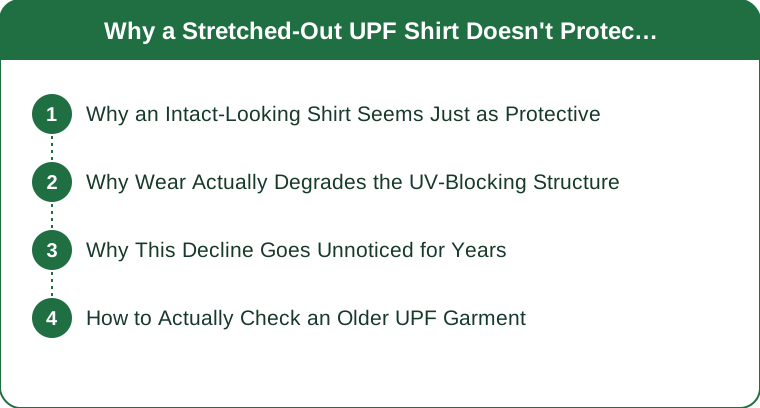
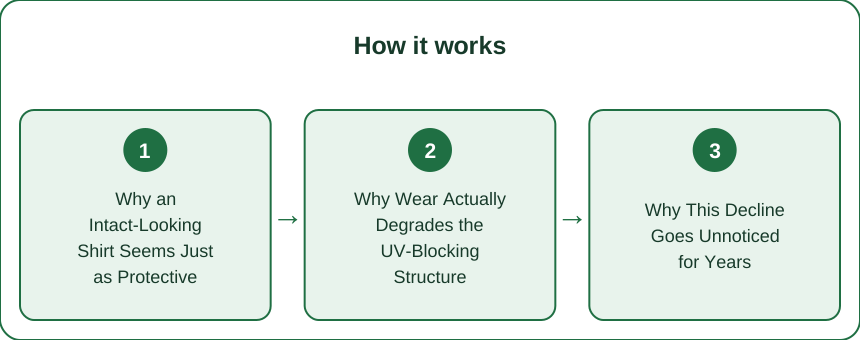
Why an Intact-Looking Shirt Seems Just as Protective
The visual assumption: fabric that hasn’t torn or visibly worn out looking identical to a new shirt, which makes it reasonable to assume the UPF rating printed on the original tag still applies exactly as tested.
Why Wear Actually Degrades the UV-Blocking Structure
The fiber-level reality: UPF protection depending on how tightly woven fibers are and how little light passes through the gaps between them, and repeated stretching, washing, and general wear gradually loosens that weave and thins the fibers, letting more UV light pass through even when the fabric shows no visible damage.

Why This Decline Goes Unnoticed for Years
The overlap: sunburn or sun damage from a degraded shirt being easy to misattribute to a longer time outside or a missed spot of sunscreen, rather than tracing it back to a favorite sun shirt that’s simply lost some of its rated protection over time.
How to Actually Check an Older UPF Garment
The practical test: holding the fabric up to a bright light and checking whether noticeably more light passes through compared to a newer version of the same garment, and rotating out heavily worn favorites after a few full seasons, and the frame (repeated stretching and washing loosens the weave that gives UPF fabric its protection — checking older favorites against light is what actually reveals the fade.)
A UPF-rated shirt bought years ago and still worn regularly gets assumed to offer the same protection as day one, since the fabric looks intact. But UPF protection depends on how tightly woven fibers are, and repeated stretching, washing, and wear gradually loosens that weave and thins the fibers, letting more UV light through even when there’s no visible damage. Sunburn from a degraded shirt is easy to misattribute to a longer time outside rather than tracing it back to a favorite sun shirt that’s quietly lost some of its rated protection. Holding older favorites up to bright light and rotating them out after a few full seasons is what actually catches the fade.
Keep Reading
This article is for general informational and styling purposes only. Fit, sizing, and product availability may vary.