UPF 15 vs 30 vs 50+: What the Numbers on Your Sun Shirt Actually Mean
Quick Answer: UPF rates how much UV radiation passes through fabric — UPF 50 blocks about 98% of UV rays, UPF 30 blocks about 97%, and UPF 15 blocks about 93%. The jump from 30 to 50 matters less than most people assume; the bigger factor is whether the fabric stays dry and unstretched.
You’re standing in the sun protection aisle staring at three shirts, each with a different number stitched into the tag, and no real sense of what separates them. The gap is smaller than the marketing suggests — and there’s a bigger variable most shoppers miss entirely.

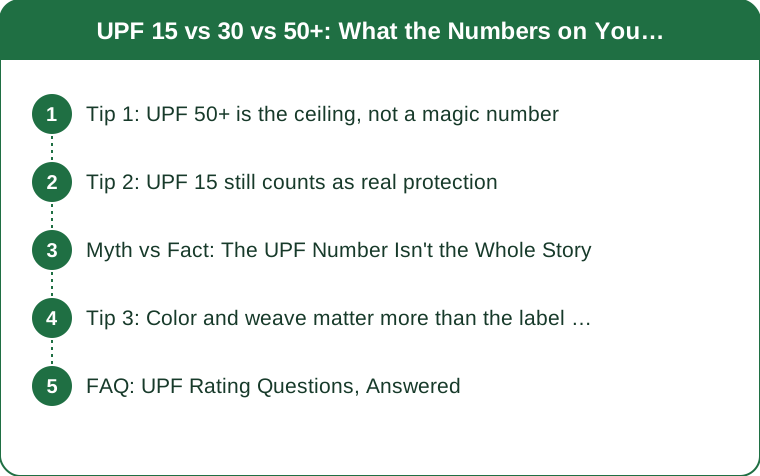
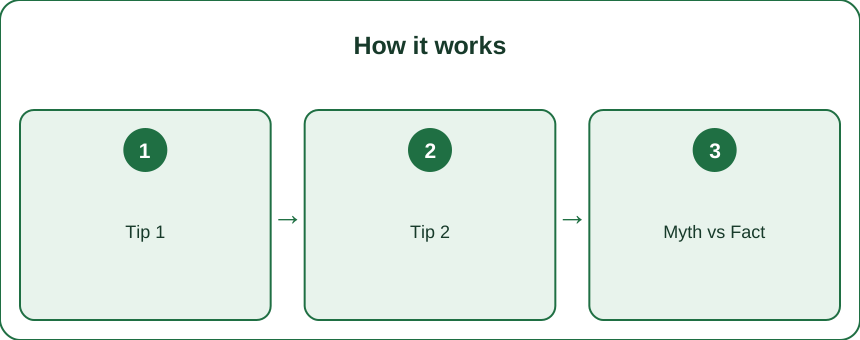
Tip 1: UPF 50+ is the ceiling, not a magic number
UPF ratings cap at 50+ because anything beyond that blocks a statistically negligible amount of extra UV — the difference between UPF 50 and a theoretical UPF 100 fabric is a fraction of a percent. Buying UPF 50+ over UPF 30 buys you very little extra protection, just a bigger number on the label.
Tip 2: UPF 15 still counts as real protection
A UPF 15 garment is legally required to block at least 93% of UV rays to earn that rating at all. For short exposure — a walk to the car, a quick errand — UPF 15 is genuinely useful, not a marketing minimum to be avoided.

Myth vs Fact: The UPF Number Isn’t the Whole Story
Myth: A high UPF number means the fabric works no matter what. Fact: Stretching a UPF fabric over a swimsuit body, or letting it get wet, can drop its effective rating by 20-40%. The number on the tag is measured on dry, unstretched fabric in a lab.
Tip 3: Color and weave matter more than the label suggests
Darker, tightly woven fabric blocks more UV than a light, loosely woven one carrying the same UPF number, because dye absorbs UV as a second layer of defense. If you’re choosing between two UPF 30 shirts, the darker, denser one is doing more real-world work.
FAQ: UPF Rating Questions, Answered
Is UPF 50 worth paying more for than UPF 30?
Only marginally — the real-world UV block difference is under 1%. Spend the extra money on fit and durability instead, since a garment you actually wear consistently protects more than one sitting in a drawer.
Does UPF rating fade with washing?
Yes, gradually — most treated fabrics lose meaningful UPF after roughly 20-30 washes unless they’re inherently woven for protection rather than chemically treated.
Do regular cotton shirts have any UPF protection?
A typical white cotton tee sits around UPF 5-8 — some protection, but well below the UPF 15 minimum needed for a real sun-protective rating.
TL;DR:
- UPF 30 to UPF 50 is a marginal real-world difference, not a doubling of protection
- UPF 15 still blocks over 93% of UV — useful for short exposure
- Wet or stretched fabric loses effective UPF, sometimes significantly
- Darker, tighter weave adds protection beyond the printed number
The label matters less than how you actually wear and maintain the shirt — dry, loose, and replaced every few seasons.
Keep Reading
This article is for general informational and styling purposes only. Fit, sizing, and product availability may vary.